
Foley catheters are commonly used in urological care and the management of hospitalized patients. One key structural difference is the number of channels (lumens). The most common types in clinical practice are two-way and three-way Foley catheters.
Both types drain urine and use an inflated balloon to hold the catheter in place within the bladder. However, their different lumen designs make them suitable for different clinical situations. Two-way Foley catheters are typically used for routine urine drainage. Three-way Foley catheters have an additional, separate irrigation lumen and may be used when continuous bladder irrigation is needed—for example, after certain urological procedures involving bleeding, in cases of visible blood in the urine, or when blood clots could obstruct drainage.
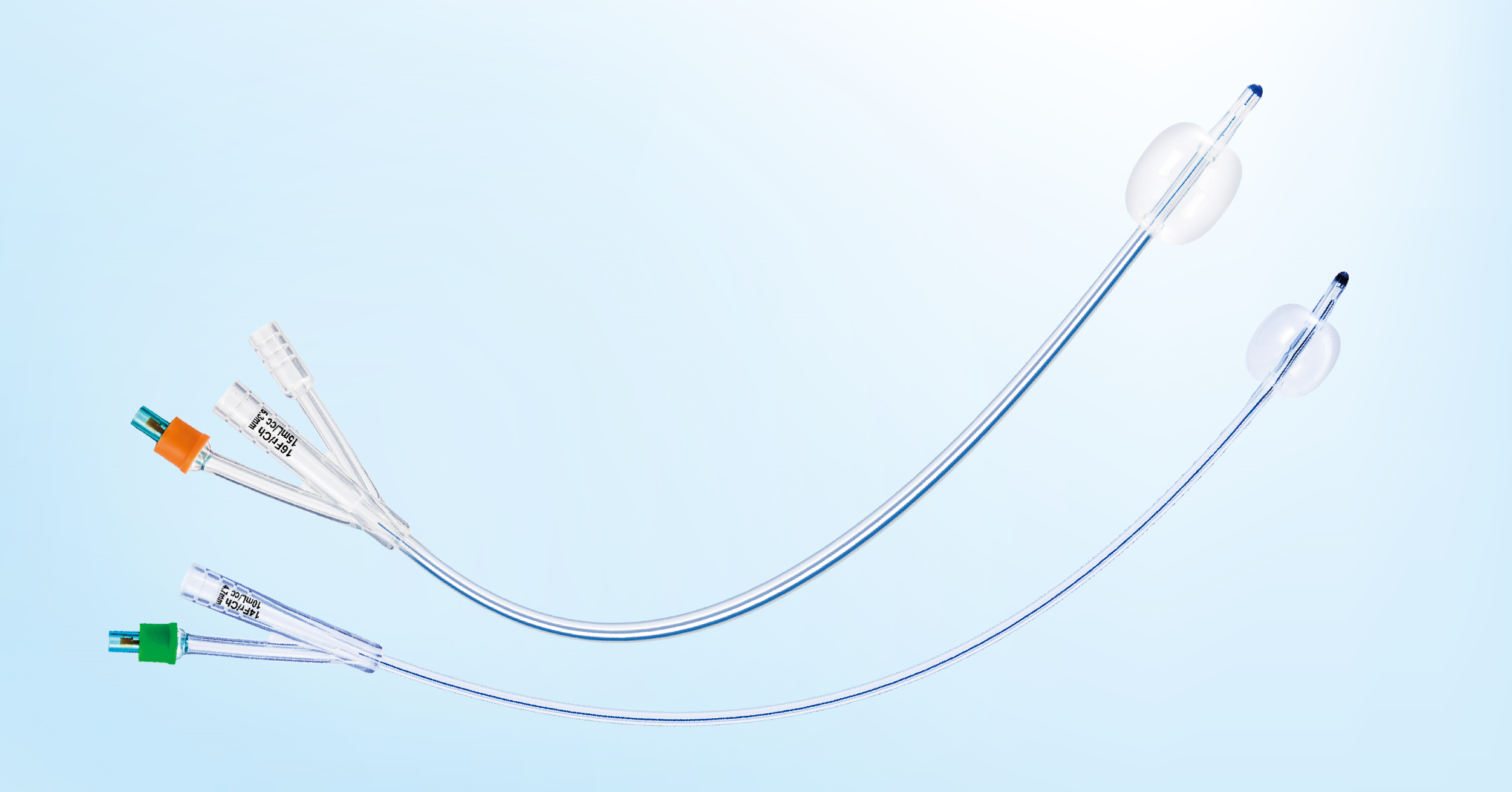
Two-Way vs. Three-Way Foley Catheters at a Glance
| Feature | Two-Way Foley Catheter | Three-Way Foley Catheter |
|---|---|---|
| Number of Lumens | Two | Three |
| Urinary Drainage | Yes | Yes |
| Balloon Inflation | Yes | Yes |
| Bladder Irrigation Channel | No | Yes |
| Core Function | Urinary drainage and balloon retention | Urinary drainage, balloon retention, and bladder irrigation; under selected clinical protocols, it may also support intravesical drug instillation. |
| Common Applications | Routine bladder drainage, urinary retention, selected perioperative drainage, and urine-output monitoring when clinically indicated | Selected cases requiring bladder irrigation, including gross hematuria, clot retention, or anticipated obstruction |
| System Configuration | Catheter connected to a closed urinary drainage system | Catheter connected to urinary drainage and irrigation systems when continuous bladder irrigation is used |
How Do Two-Way and Three-Way Foley Catheters Work?
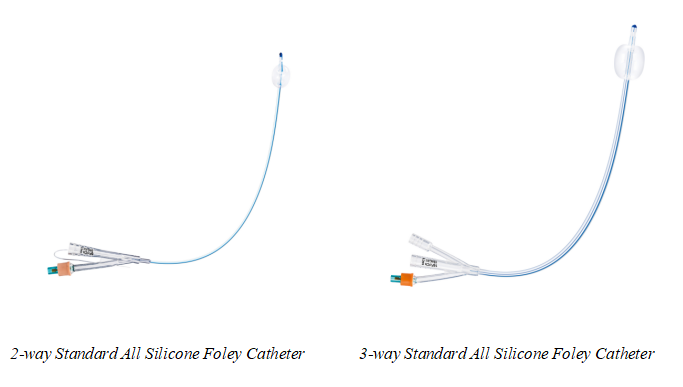
Two-Way Foley Catheter
A two-way Foley catheter is commonly used for routine bladder drainage.
Structure: It has two separate lumens. The drainage lumen carries urine into a collection system; the balloon inflation lumen is used to fill the balloon with sterile water, securing the catheter in the bladder.
Size: Generally smaller in diameter, with common adult sizes ranging from 12 to 26 Fr/Ch.
Primary Uses: Bladder decompression, urine drainage, management of urinary retention, and perioperative drainage or urine output monitoring when clinically indicated.
Three-Way Foley Catheter
A three-way Foley catheter is designed for clinical situations that require bladder irrigation. It adds a separate irrigation lumen to the two-way design.
Structure: It has three separate lumens: a drainage lumen, a balloon inflation lumen, and an irrigation lumen, which may also be used to deliver medication when needed. Irrigation fluid enters the bladder through the irrigation lumen, while urine, irrigation fluid, and any small blood clots drain through the drainage lumen.
Size: Generally larger in diameter, with common sizes ranging from 16 to 26 Fr. Larger balloon capacities are also available.
Primary Uses: Urine drainage, balloon-assisted retention, and bladder irrigation. It may be used for bleeding after certain urological procedures, visible blood in the urine, or when blood clots may obstruct drainage.
Tip: Catheter outer diameter is expressed in French (Fr) or Charrière (Ch); 1 Fr/Ch is approximately 0.33 mm. The size should provide adequate drainage while minimizing unnecessary urethral trauma. A catheter that is too small may impede drainage, while one that is too large may increase the risk of urethral irritation or injury.
Two-Way vs. Three-Way Foley Catheters: Key Selection Considerations
Selecting between a two-way and three-way Foley catheter requires an individualized clinical assessment based on patient pathology and treatment goals. Clinical evidence supports choosing the least invasive catheter that satisfies therapeutic needs.
● Define the primary purpose: If only continuous urine drainage or urine output monitoring is needed, a two-way catheter is usually selected.
● Assess the need for irrigation: If there is visible blood in the urine, blood clots, or a need for continuous bladder irrigation after urological surgery, a three-way catheter may be considered. It allows irrigation fluid to enter while urine and blood drain out.
● Choose an appropriate size: Select a catheter diameter suited to the patient while ensuring unobstructed drainage. Material and the expected duration of placement should also be considered.
● Reassess the need regularly: Regardless of the catheter type, assess whether it is still needed based on the patient’s condition and remove it promptly when it is no longer necessary.
Overall, choose a two-way catheter for routine drainage and consider a three-way catheter when continuous irrigation is needed. Healthcare professionals should make the final choice based on clinical needs.
Well Lead Medical
Well Lead Medical is one of the world’s major suppliers of medical catheters, with Foley catheters among its core products. Well Lead Medical’s urology portfolio includes standard two-way Foley catheters, three-way Foley catheters, latex Foley catheters, ball-silicone Foley catheters, and Foley catheters with temperature sensors. A range of configurations, materials, and sizes helps healthcare professionals select products suited to their intended clinical use.
As an established catheter supplier whose products are sold in more than 100 countries and regions, Well Lead Medical can meet diverse urological product needs. Contact our team to learn more about product specifications and discuss your sourcing requirements.